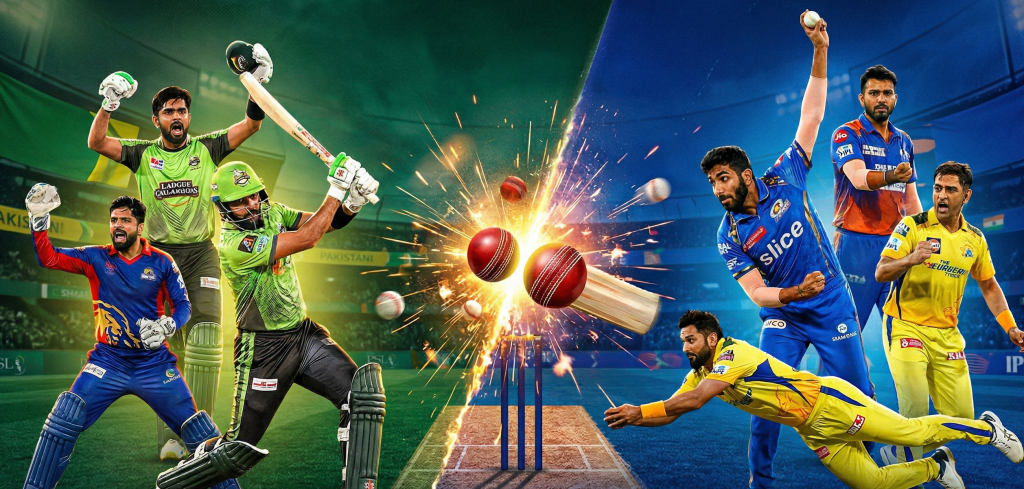
I’ve been writing about cricket leagues long enough to know that “legal action” in this sport usually means strongly worded letters that go absolutely nowhere. So when PCB chairman Mohsin Naqvi announced he’d take action against players ditching the PSL for the IPL at the last minute, I didn’t exactly rush to update my calendar with court dates.
This is the second year running that these two leagues have crashed into each other like drunk drivers at an intersection nobody thought to put a traffic light at. And look — I get why Naqvi’s frustrated. Dasun Shanaka just bailed on Lahore Qalandars to replace an injured Sam Curran at Rajasthan Royals. Blessing Muzarabani did the same thing, jumping ship for Kolkata Knight Riders.
That’s two high-profile exits in what’s supposed to be Pakistan’s premier cricket tournament.
But here’s the thing. Threatening legal action when you’ve scheduled your tournament to overlap with the IPL is like setting up a lemonade stand next to Starbucks and then getting mad when nobody buys your lukewarm drink.
I covered the Corbin Bosch situation last year — the South African who was a diamond pick for Peshawar Zalmi before making a late switch to Mumbai Indians. The PCB banned him from the PSL for one year, which sounds impressive until you realise it’s pretty much a slap on the wrist for a player who just got an IPL contract.
Naqvi referenced this case as precedent, saying “the same thing will happen this time.” Right. Because that really deterred everyone, didn’t it?
The money gap between these leagues is so massive it’s almost funny. I’ve talked to agents off the record who say IPL franchises can offer money that makes PSL contracts look like tip money. Pocket change, really. And when you’re a professional athlete with maybe a decade-long career if you’re lucky, you’re going to follow the bigger paycheck. That’s not disloyalty — that’s basic economics!
I genuinely had one of these conversations in a Mumbai hotel lobby during the 2023 World Cup. Agent nursing an overpriced coffee, telling me his client’s PSL deal was worth about what the same player would make for three matches in the IPL. He was just explaining, not bragging, why the phone call to Lahore was going to be awkward.
Thing is, Naqvi knows this. He said clashing with the IPL “is not an issue” because they’re getting excellent players coming the other way. Which is corporate speak for “we’re losing the bidding war but pretending we’re fine with it.” Daniel Sams replacing Shanaka at Qalandars is hardly an even trade. Not when Shanaka was specifically picked for his role in the squad.
And it’s not just Shanaka and Muzarabani. Gudakesh Motie, Jake Fraser-McGurk, Ottneil Baartman, Spencer Johnson — the withdrawal list reads like half a team sheet. Quite the exodus. Sure, most said “personal reasons,” which in professional sports is code for “I have a better offer and we’re all going to pretend otherwise to avoid drama.”
I remember covering a similar mess in 2019 when the Caribbean Premier League tried to compete with the English domestic schedule. That ended badly; players were pulling out left and right, franchises were scrambling for replacements, and the league’s credibility took a beating it still hasn’t fully recovered from. That’s what happens when you refuse to coordinate calendars with bigger, richer competitions.
I watched a CPL franchise operations manager physically sitting in a Barbados hotel conference room with a spreadsheet of 47 potential replacements, cold-calling agents at 11 PM because their star all-rounder had just texted his regrets two days before the opener. The panic in that room was something I’ll never forget — grown men realizing their entire tournament strategy was unraveling in real time.
Naqvi’s claim that they “could not afford to push back the PSL because we have no other window all year” is where I started really rolling my eyes. Cricket boards worldwide somehow find ways to find windows that don’t clash head-on with the sport’s biggest money-spinner.
The Big Bash League moves around its dates. The Hundred squeezed itself into August specifically to avoid these conflicts. Period. But the PSL? Nah, they’re going to barrel ahead and then act surprised when players choose IPL millions over PSL thousands.
The PSL starts March 26th, just two days before the IPL kicks off. Two days. That’s not bad scheduling — that’s more or less walking into traffic.
And the chairman’s response is to threaten legal action that probably won’t amount to anything.
Look, I don’t blame the PCB for being in a tough spot. Pakistan cricket has faced challenges that would’ve killed other boards — security concerns, political instability, international teams refusing to tour. They’ve kept their domestic cricket alive through sheer stubbornness, which I really respect. But stubbornness only works when it’s paired with smart strategy.
The smart strategy here would’ve been working with the BCCI months ago to space out the tournaments. Yes, India and Pakistan don’t play each other bilaterally because of political tensions. But these are cricket boards, not governments. A phone call saying “hey, can we not schedule our leagues on top of each other” isn’t exactly a diplomatic incident.
I learned this lesson covering minor league baseball in the States about a decade ago. Two independent leagues kept scheduling their all-star games on the same weekend, both losing sponsorship money and TV viewers because they were splitting the audience. Took three years before someone finally picked up the phone.
By then, one league had folded. Coordination isn’t surrender — it’s survival.
Instead, what we’re seeing is the obvious result of two leagues trying to occupy the same space at the same time. The bigger, richer one wins. Every time. That’s not the IPL being villainous — it’s just market forces doing what market forces do.
I’ve spoken with a bunch of franchise owners in various leagues over the years, and they all say the same thing: player loyalty exists until it doesn’t. Contracts matter until better money shows up. And threatening legal action against players for choosing better opportunities is how you make sure future players won’t sign with you at all unless they absolutely have to.
Naqvi can ban Shanaka and Muzarabani from the PSL for a year or two years or forever, but it won’t change the real problem, which is that the PSL is trying to compete with the IPL while playing by different rules with way less money. It’s bringing a knife to a gunfight and then getting mad when the knife doesn’t work.
The PSL has value — it’s given Pakistani players a domestic league that develops talent and keeps cricket alive during international droughts. But that value doesn’t mean it can go head-to-head with the IPL and expect to come out ahead. Sometimes the smart play is knowing when you’re outmatched and finding a different lane to work in.
Thing is, I don’t think this changes anything. The PSL will start on March 26th with whatever players haven’t jumped ship yet. Some matches will be competitive. Some won’t. Naqvi will probably hand out his bans, lawyers will send some letters, and next year we’ll do this whole dance again when the schedules inevitably clashes for a third time.
I just wish someone at the PCB would admit what everyone already knows: you can’t compete with the IPL by pretending the IPL doesn’t exist.
 Cricket Masala
Leave a comment