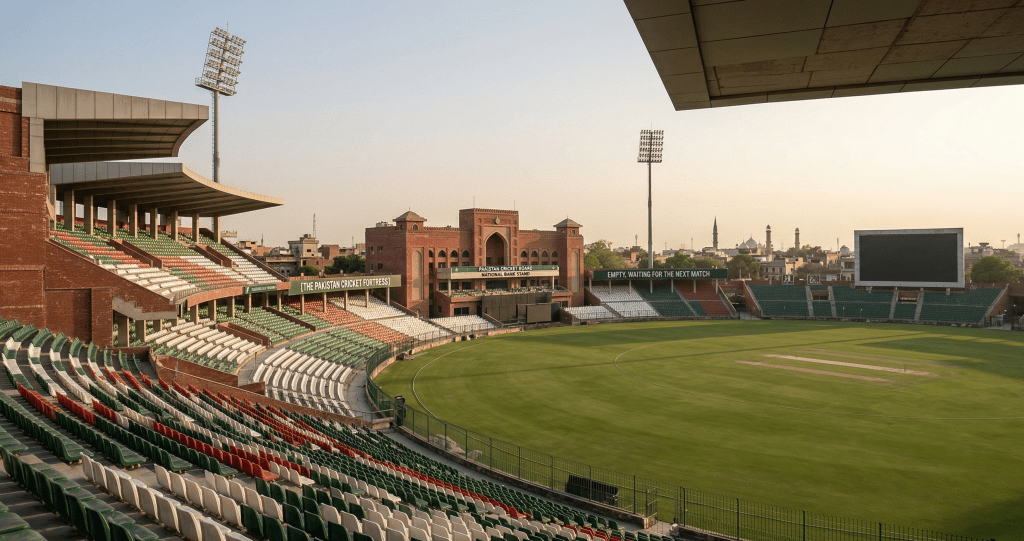
The Pakistan Super League will play out in empty stadiums when it kicks off on March 26. No crowds. No opening ceremony. No travel between cities beyond Lahore and Karachi.
The reason sits just across the border. A crisis in West Asia — centered on Iran — has forced the Pakistan Cricket Board to strip its flagship tournament down to skeleton crew basics. What was supposed to be a six-city celebration has become a two-venue operation playing out in silence.
PCB chairman Mohsin Naqvi made the announcement after consultations with security agencies. And he didn’t dress it up. The decision came down to keeping things aligned. Pakistan’s Prime Minister had already asked the entire nation to limit movement because of fuel shortages. Schools closed. Work shifted online. Eid holidays stretched longer than planned.
“We can’t ask people to restrict their movements and then have 30,000 people in stadiums every day,” Naqvi said.
Thing is, the conflict in West Asia isn’t just about what’s happening nearby security-wise. It’s choking out Pakistan’s economy through the Strait of Hormuz. Oil shipments — the thing that keeps everything moving for any country still building its economy — have been disrupted. The global oil crisis hit Pakistan harder than most because the country imports most of its petroleum products. When supply chains lock up in the Gulf, Pakistan feels it within days.
Take the June 2022 fuel crisis — when a single week of delayed shipments from Fujairah triggered petrol station queues stretching for kilometers across Karachi and Lahore. The government implemented odd-even rationing. Within 72 hours. That’s how thin the margin is when you’re importing 85% of your crude oil and the chokepoint sits in the Gulf.
So the PSL becomes caught in the crossfire of a much larger mess.
Naqvi left a small window open. Maybe — just maybe — the later stages of the tournament could welcome fans back if the crisis in Iran cools off. “Perhaps it ends in 10 days, perhaps 15,” he said. But that’s hope talking more than planning. No one knows how long this war will drag on. No one’s making promises.
Opening match on March 26. Final on May 3.
But instead of bouncing all over Pakistan — hitting Peshawar, Rawalpindi, Multan, Hyderabad — every game will happen in Lahore or Karachi. The PCB pointed to resource management. With no crowds filling stadiums anyway, there’s no point in moving equipment, broadcast crews, and teams across the country when fuel’s being rationed.
Peshawar was supposed to host a match on March 28. That’s gone now. The northern city won’t see a single delivery. Naqvi apologized to the cities losing matches and promised that the 2027 edition would expand venues again. But for this year, it’s Lahore and Karachi or nothing.
The financial hit lands squarely on franchise owners. Gate receipts — the majority of which flow to the franchises — disappear in a heartbeat when stadiums sit empty. Naqvi promised the PCB would compensate them for lost revenue. He also pledged full refunds for everyone who’d already bought tickets. Thousands of fans had secured seats expecting to watch Shaheen Afridi bowl under lights or Babar Azam anchor a chase. Now they’ll get their money back and watch from home.
The IPL’s 2020 season in the UAE — played entirely without spectators — showed exactly what that looks like in rupees and dollars. Franchises reported matchday revenue losses averaging 35-40% even with broadcast compensation, and the Mumbai Indians alone estimated their gate receipt shortfall at roughly $8 million across the tournament. And that’s in a league with far deeper sponsor pockets than the PSL operates with.
This isn’t the first time regional instability has screwed up cricket in Pakistan. The 2009 attack on the Sri Lankan team bus in Lahore shut down international cricket in the country for nearly a decade. Pakistan played “home” series in the United Arab Emirates for years. The PSL itself only returned to Pakistan in 2017 after launching in Dubai. Even then, it took until 2019 for the full tournament to happen on Pakistani soil. So the memory of losing cricket — of watching their own league play out in another country — weighs heavy for Pakistani fans. At least this time the matches stay in Pakistan. At least the tournament still happens. Hollow relief.
The PSL has grown into one of the most-watched T20 leagues in the world. Last year’s edition racked up huge viewership across South Asia and the Middle East. Sponsors lined up. International stars committed to full seasons.
The league was supposed to prove that Pakistan could host a world-class cricket event without compromise. Now it’s a made-for-TV product out of necessity rather than choice.
Naqvi emphasized that security agencies drove the decision. Pakistan’s intelligence and security forces don’t take these calls lightly. The country shares a long border with Iran — over 900 kilometers — and whatever’s happening in West Asia has implications that spread through Balochistan and Khyber Pakhtunkhwa. Large public gatherings become difficult to secure when national resources are stretched thin managing a fuel crisis and potential spillover from a regional conflict.
And cricket stadiums make tempting targets. Thirty thousand people in one place. Live television coverage. International players from multiple countries. The symbolism alone creates risk.
So the PCB decided: tournament happens, but without the risk factor that crowds bring.
Still, the cricketers will play in eerie conditions. Anyone who’s watched a match in an empty stadium knows how strange it feels. The crack of bat on ball echoes, and conversations between players carry across the field. There’s no roar when a boundary’s hit, no groan when a catch is dropped. The atmosphere that makes the PSL electric — the noise, the energy, the sea of team colors in the stands — vanishes. All of it.
Australia’s Big Bash League ran most of its 2020-21 season in front of empty stands during COVID lockdowns. Players described it as “training with cameras” — Glenn Maxwell later said the hardest part wasn’t the silence after a six, but hearing his own footsteps running between wickets. Television viewers could pick up every sledge, every frustrated swear word, every conversation at the non-striker’s end. The broadcast had to implement audio delays.
For franchises, it’s a disaster beyond just lost ticket sales. Merchandise booths won’t open. Concession stands stay shuttered. Local economies in host cities miss out on the influx of fans who book hotels, fill restaurants, and spend money around match venues. The PSL has become a significant economic driver over its nine previous editions. Cities compete to host matches because of the financial boost they bring.
This year, four cities miss out entirely.
The opening ceremony’s cancellation hits particularly hard. The PSL launches each season with a massive show — performers, lights, music, celebrity appearances. It’s become a cultural event that transcends cricket.
Families plan evenings around it. Social media buzzes for days afterward. Scrapping it sends a message about how serious the situation is.
But the PCB is holding the line on the schedule itself. March 26 to May 3. No delays. No relocation to neutral venues abroad. The tournament will finish before the weather in Lahore and Karachi becomes unbearable — Pakistan in May can hit 45 degrees Celsius — and before the next international cricket cycle begins.
Karachi Kings and Multan Sultans will chase championships in front of empty seats. The fast bowlers Lahore Qalandars have assembled will bowl to silence.
And Naqvi’s promise that “the PCB will take action” against any players who choose the IPL over the PSL this season takes on new weight. The Board can’t afford mass pullouts when it’s already asking fans and sponsors to stick with a stripped-down product.
Most boards learn this pattern the hard way — international players cite “personal reasons” or “family commitments” right up until a security situation shifts, then suddenly six marquee names withdraw within 48 hours.
The PSL saw it happen in 2019 when escalating India-Pakistan tensions prompted a wave of last-minute pullouts just before the Lahore leg.
The uncertainty gets to everyone. Naqvi’s timeline — maybe 10 days, maybe 15 — reflects the chaos of predicting how regional conflicts evolve. Wars don’t follow cricket schedules. Oil markets don’t care about tournament finals. Pakistan’s government is managing multiple crises simultaneously, and the PSL ranks well below keeping the lights on. Well below keeping fuel flowing.
So the tournament will start on March 26 in whatever form it takes, with matches in Lahore and Karachi, no crowds, broadcast-only product. Franchises compensated. Tickets refunded. And a quiet hope that somewhere between the opening match and the final on May 3, the situation changes enough to let fans back in for the knockout stages.
But no one’s betting on it. The PSL will likely play out its entire season in empty stadiums. The pictures will look strange — world-class cricketers performing for television cameras and nothing else. The sound will be wrong. The energy will be flat. And Pakistan will watch its cricket on screens at home, stuck indoors by fuel rationing and security concerns. A war rages close enough to matter.
 Cricket Masala
Leave a comment