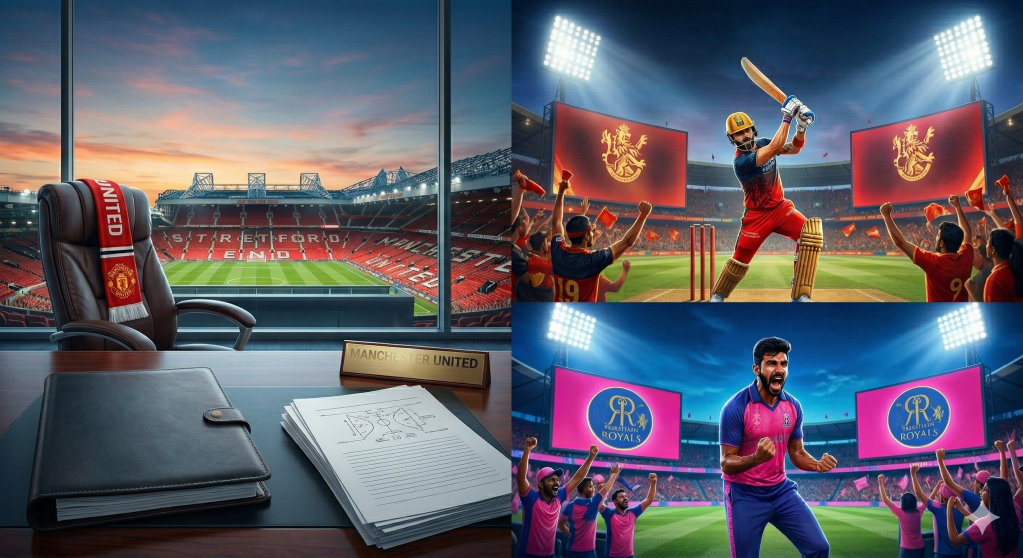
The price tags keep climbing, and now they’re in the stratosphere. Royal Challengers Bengaluru and Rajasthan Royals — two of the original eight IPL franchises from 2008 — are up for sale, and the bidding has blown past a billion dollars per team.
Avram Glazer is in the mix. Yes, that Glazer — the Manchester United co-owner whose family turned one of football’s most storied clubs into a leveraged buyout case study. His firm, Lancer Capital, made the shortlist for both RCB and RR, joining a crowd of investors who smell opportunity in Indian cricket’s explosive economics.
In May 2021, hundreds of Manchester United supporters stormed the pitch at Old Trafford ahead of a match against Liverpool. The game got postponed. They were protesting the Glazers’ ownership — specifically the family’s role in the failed European Super League attempt and years of loading debt onto the club while dividends flowed to shareholders. Security barriers were breached, goalposts spray-painted with “Glazers Out,” and the backlash made global headlines.
That’s the baggage Lancer Capital brings to the IPL table.
The numbers tells a wild story. Back in 2008, when the IPL launched, RCB cost $111.6 million. Vijay Mallya’s United Breweries Group bought it. That made it the second-most expensive franchise at the time. RR went even cheaper — $67 million, the lowest of the original eight, bought by Emerging Media.
Fast forward seventeen years. The estimated price for RCB now sits between $1.2 billion and $1.8 billion. For RR, it’s $1.2 billion to $1.4 billion. That’s not inflation! That’s a completely different asset class.
And here’s the comparison that matters: in 2021, the BCCI sold two new franchises, Lucknow and Ahmedabad, for a combined INR 12,715 crore, about $1.69 billion total. The bids coming in for RCB or RR alone could match or exceed what those two teams cost together just four years ago.
Eight investors made the RCB shortlist. There’s, beyond Glazer’s Lancer Capital, the Manipal Group owned by Ranjan Pai, Adar Poonawalla of Serum Institute fame, the Times of India Group, EQT Private Capital, Capri Global, Sanjay Govil — the US businessman who owns Washington Freedom in Major League Cricket and Welsh Fire in the Hundred — and Premji Invest, the private equity arm of Wipro’s founding family.
Five made it through for RR: Lancer Capital again, Capri Global, Arizona tech entrepreneur Kal Somani, Govil, and Times of India Group. Most of these bidders aren’t flying solo — they’re assembling consortiums, bringing in partners to split the huge financial load.
Thing is, many of these names have been circling the IPL for years. Capri Global and Lancer Capital both bid for the Ahmedabad and Lucknow franchises back in 2021. Capri put up INR 4,024 crore for each team. Lancer went slightly higher — INR 4,128.65 crore for Ahmedabad and INR 4,023.99 crore for Lucknow.
Neither won. But they didn’t give up. Lancer now owns the Desert Vipers in the UAE’s ILT20 league. Capri owns Sharjah Warriorz in ILT20 and UP Warriorz in the Women’s Premier League.
The process is moving fast. Final bids for RR are expected in early March. For RCB, bidders were told late February, though no firm date’s been set. After that comes technical verification — making sure the money’s real and the bidders meet BCCI standards — then exclusive negotiations, then contracts.
The BCCI gets a cut no matter who wins. Under the IPL franchise agreement, the board takes 5% of the sale price. At $1.5 billion, that’s $75 million walking straight into cricket’s governing body in India.
Two major financial firms are running the sales. Raine Group, which ran the private equity sale of England’s Hundred competition last year, is managing the RR process. Citigroup is handling RCB.
Current ownership is why these teams are on the block. Diageo controls RCB through Royal Challengers Sports Private Limited, the parent company for both the men’s and women’s teams. This is the global booze giant that owns brands like Johnnie Walker and Guinness. Last November, in filings to India’s Securities and Exchange Board, Diageo said it was reviewing its cricket investment. Meaning: cricket isn’t our thing, we’re selling. The company set a deadline of March 31, 2025 to close the deal.
RR’s ownership is more fragmented. Manoj Badale’s Emerging Media owns about 65%, but several investors have picked up minority stakes over the years. In 2021, RedBird Capital Partners — which has money in Liverpool’s parent company and the Boston Red Sox — bought a 15% slice for an undisclosed price. Now the whole thing’s up for grabs.
The last major IPL franchise transaction was Gujarat Titans, bought in 2021 by global fund CVC Capital Partners for INR 5,625 crore, around $755 million. This year, Indian conglomerate Torrent Group bought a 67% stake in the Titans for INR 5,050 crore. Even that deal, massive as it was, looks small next to what RCB and RR might fetch.
So why the crazy valuations? Start with the IPL’s revenue trajectory, which tells most of the story right there. The league signed a media rights deal in 2022 worth $6.2 billion over five years. That’s more than double the previous contract. Brands are pouring money into sponsorships. Stadiums sell out. Broadcast numbers rival anything in cricket outside the World Cup.
To put the IPL’s compression of value in perspective: NBA franchises took about 40 years to go from $100 million average valuations in the mid-1980s to over $2 billion by the 2010s. The IPL has essentially replicated that trajectory in 17 years.
The Charlotte Hornets sold for $175 million in 2010; by 2023, the Phoenix Suns went for $4 billion. The IPL is running that same playbook at triple speed.
But it’s not just about the money now — it’s about where investors think this is going. The IPL is expanding. New territory every year. The Women’s Premier League launched in 2023 and is already pulling real viewership. New teams could be added in future sales. International leagues are sprouting up — ILT20 in the UAE, MLC in the US, South Africa’s SA20 — and the IPL model is the template everyone’s copying.
Owning an IPL franchise means owning a piece of cricket’s most lucrative tournament in the world’s most cricket-crazy market. India’s economy is growing. Its middle class is expanding. Media consumption is shifting to digital, and the IPL dominates streaming platforms during its season.
Then there’s brand value. RCB and RR aren’t just cricket teams — they’re entertainment properties with massive fan bases. RCB, despite never winning an IPL title until the women’s team broke through this year, has one of the league’s largest followings, thanks in part to years of Virat Kohli playing in Bengaluru. RR won the inaugural IPL in 2008 and has built a loyal base in Rajasthan, one of India’s most cricket-mad states.
Still, billion-dollar price tags for sports franchises aren’t unique to cricket anymore. American sports set the template decades ago — NFL teams regularly sell for over $5 billion now, and even MLS franchises, which cost $10 million in the late 1990s, go for $500 million or more. European football clubs have become investment vehicles for sovereign wealth funds and private equity.
The IPL is catching up, fast. In 2008, the league’s total franchise values sat around $723 million combined. Now single teams are worth more than that entire field was at launch.
And the bidders aren’t just cricket enthusiasts. They’re real money — private equity firms, industrial conglomerates, tech entrepreneurs. Glazer’s interest is particularly notable. His family’s ownership of Manchester United has been controversial, defined by protests from fans over debt levels and neglect of the club’s facilities. But love them or hate them, the Glazers understand sports franchises as financial assets. If Lancer Capital wins either bid, it signals that smart money sees the IPL as a mature, profitable investment, not a speculative bet.
One wrinkle: the BCCI has final approval. Even after the top bidder is picked, the board must ratify the sale. The IPL has rules about who can own teams — no conflict-of-interest issues, no betting ties, clean finances. The technical verification round will sort out whether bidders meet those standards.
Timing matters too. Both sales are racing to close by March or soon after, right before the 2025 IPL season kicks off in late March or April. New owners would step in just as the tournament begins, inheriting teams in full swing.
For RCB, that means taking over a team whose women’s squad won the WPL title. For RR, it’s a team that’s been competitive but hasn’t won since that magical 2008 season under Shane Warne’s captaincy.
What happens after the sales close is anyone’s guess; new owners could keep the current management, or blow it up. They could pump money into scouting, facilities, coaching. They could rebrand. They could push for more games, more revenue streams, more integration with other leagues they own.
When Todd Boehly’s consortium bought Chelsea FC for £4.25 billion in May 2022, the new ownership immediately went on a spending spree. Over £600 million on player transfers in the first year alone. They fired manager Thomas Tuchel four months in, hired and fired Graham Potter by April 2023, restructured the academy, overhauled backroom staff, and signed players to contracts stretching seven or eight years to spread transfer costs.
The result: Chelsea finished 12th in the Premier League that season, their worst finish in decades. The lesson? Deep pockets and ambition don’t always translate to immediate success, especially when new owners try to reshape everything at once.
Or they could just sit back and watch the IPL’s valuation keep climbing. Because if there’s one thing these bids prove, it’s that cricket franchises in India aren’t just sports teams anymore. They’re billion-dollar assets in a league that’s only getting bigger.
Consider what happened to those who bought in early and held on. Shah Rukh Khan’s Red Chillies Entertainment paid $75.09 million for Kolkata Knight Riders in 2008.
By cautious estimates based on recent transactions, KKR is now worth around $1.1 billion. That’s a roughly 1,365% return over 17 years. Mumbai Indians, purchased by Reliance Industries for $111.9 million in 2008, is now valued north of $1.3 billion. The early believers didn’t just make good money — they made generational wealth by holding a stake in what became the world’s richest cricket league.


Leave a Reply